Brave

towering pine

Some things leave no room for misunderstanding,
like your climbs to the tops of towering pines,
and your belief that you can never cry.

At age five, you dream of a woman
with wings like a bat dressed all in black.
She swoops down, grabs you, pins you in her lap,
and while hitting you over and over, she’s whispering
that it will end when you stop struggling;
so you pretend to relax until her grip loosens
and then you fight to escape, but each time
her strength overwhelms you. It takes
several beatings before you realize
she is trying to help you, she is teaching you
how to be brave—
how to be so still
that you can let yourself have no feeling
when the scratchy hands are pressing into you,
like the night lets itself be swallowed by darkness.

An eight-year-old now, you’re standing
outside their locked bedroom door, waiting
for your mother to call to you
as he yells his nonsense, rips out drawers,
and slams the walls with his fists.
When something made of glass shatters
against the vanity, her cry of surprise
convinces you to call the police.
They come and go in a flash—
barely pausing to ruffle your hair
and chuckle
that it was all “just a misunderstanding”—
and they leave you there,
to keep being unseen.

For most of the school year,
at age eleven, you are chronically ill:
the oozing, itching, grey-swollen chickenpox lesions
that make you potently untouchable,
lead to an infiltration of fevers, flooded lungs,
and swollen, piercing tonsils and ears
that hold you prisoner from the inside,
but soon you come to know your captors
as the oddly loyal, untiring allies
who keep you warded at night, for months.
Your classmates are jealous, though,
that you still make passing grades
in your constant absence from school—
on the phone, they accuse you of faking,
and you can’t help the feeling, either,
that being sick really is a kind of cheating,
like getting something you want
without doing anything to earn it.

Mom is taking you to open a bank account
with your own passbook, though you’re just twelve
(her eyes are still swollen from crying yesterday),
so you can sign for the money you’ll need to get
yourself and your little brother to the airport
to fly to an uncle you barely know in New York,
if she either goes missing, or you find her dead,
because, as she’s confided to you—
and you have no reason not to believe it—
your father vowed to kill her.
For the next three years, then (she doesn’t know),
you skip lunch at school and save the money
to deposit into the “plane ticket” account.
No, she never gets murdered,
maybe even because you always keep watch,
like the kind of parent you’d want to be would,
even after your father finally moves out
during the same summer you get your tonsils
(and the disease they harbored) removed.

You’re now proving to be a picture of health
(though you bear the hunger of indignity, standing
in lines in the school gym for government hand-outs
of peanut butter, processed cheese and expired bread),
because you can run like no one else.
You are your soccer coach’s favorite, you believe,
because you are tough, and you work the hardest.
He makes a fuss over you like you are special,
takes you out for ice cream, has you come along
on fishing trips with his sons, and invites
you over for dinner, or to stay the night,
and you never consider he’ll expect you to repay him
for these casual, kind gestures, until
he’s suddenly always touching and hugging you
as if it is his right, and even though you make sure
only to be in public places with him,
in plain sight of your teammates’ parents,
you can’t discourage his lewd hovering,
or his propositions (which he thinks are charming)
for you to fuck him in the back of his van.
Somebody should be watching!
People are watching, but they only see
the things that have no need
for invisibility, like the crude posturing
of a man just being a man—

just someone who reserves
the Scouts’ clubhouse through Parks and Rec
for a “team meeting” that you feel obligated to attend;
someone who waits on a weekday evening
in a prefab aluminum building
with the lights dimmed
for a fifteen-year-old girl to enter alone,
while, at home, his own kids watch T.V.,
and his wife keeps his dinner warm.

Some things leave no room for misunderstanding—

like the lust throbbing in a man’s neck,
the presumption gleaming in his eyes,
and the fact that wrongs always pile upon wrongs
in the same way he now heaps this assault from behind,
with his thick hands fumbling for your breasts,
on top of his preposterous lie;

and so when he leans in with his belly
and his cock stiffens against the small of your back,
a scream gets trapped in your throat,
and you find yourself struggling wildly—
you elbow him hard in the ribs,
then rear up and ram your head into his chin,
and somehow stun him long enough
to get away—

you get away,
but leaving yourself there
unseen in the dark
doesn’t ever feel brave.

STEPHANIE L. HARPER
Everest

Everest

“…since you disregard all my advice
and do not accept my rebuke,
 I in turn will laugh when disaster strikes you;
I will mock when calamity (…)

overtakes you like a storm…”             Proverbs 1:25-27

Icefalls—
freezing streams of tears
formed in the weather of her own invention—

rip a hidden dominion
of chasms
beneath

this Mecca we faithfully revisit
upon surviving each prior pilgrimage
& restless penance at base camp.

No snow-blind bid for ascension
will leave its trace upon this cruel, white slate,
as cold-pierced flesh, violated senseless, chases

the gossamer promise of substantiation
in the biting night silence,
scaling massive vertical icy rises that crest

on the barren horizon, as intimate as distant;
in this alien nest we recognize
lies the black womb’s waif—

the silky red dawn
drawing its first cerulean-cradled breath—
heralding the bloody miracle of life & death.

So tiny are these pitons & ropes
we follow toward willful, brutal injury—
they mark the fabled way through

this bone-strewn wilderness
to the sun-frozen summit,
her brimming lids blinking in feigned oblivion,

now hiding her sinister eyes,
now revealing
contrived glimpses of rapture.

STEPHANIE L. HARPER


Unvoiced

Unvoiced

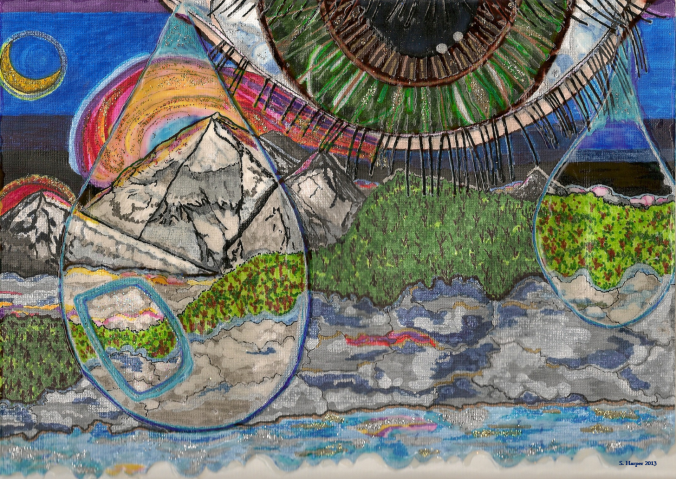
Illustration by S. L. Harper

The words from the dream are
wisps in the air like broken
spider webs wrapping invisibly
about my face and forearms

The fake sunrise tarp draped before me
ripples like a summer mirage
half-soaked into the rural street

and then          as if I were not supposed to
I step through and place my foot
solidly into an evening of dark specters
waiting outside of their existence
to become what I am

there

I am the cool turpentine
wash of grays seeping over
a dusting of brown sand in the road

I am the night falling upon
neglected pastures of weeds
sputtering up about the silhouettes
of tree stumps and old swing sets

I am the street lamps’ sallow illumine
peering out sensibly from between
foolish tree skeleton embraces

and I am still the child
twisting acorns into the asphalt
with the soles of her shoes

squealing gleefully into the night

STEPHANIE L. HARPER

“Unvoiced” made its first appearance in Sixfold magazine, winter 2013 edition.

I was inspired to include it on my site today after reading a little metaphysical beauty posted on Robert Okaji’s  O at the Edges , called “Irretrievable.” 

Anniversary #18

Mike and I celebrated our 18th anniversary on January 23, 2016, but I thought this poem would make a great post for Valentine’s Day… The photo I’ve chosen to accompany my poem is of a bird I’m particularly in love with — he is a Cob named Bryn, and he is the devoted mate to a Pen, Wynn. They are a glorious pair whose annual brooding and chick rearing on the moat of Bishop’s Castle in Wells are meticulously covered by brilliant photographer, Will Glenn. In this shot, Bryn’s industrious foraging in support of his mate and their progeny is not only noble and adorable, but it reminds me of Mike’s constant efforts to be a nurturing, responsible husband and father, and ever-evolving human being, who inspires me in more ways than I could ever express!

To all you lovebirds out there:

HAPPY VALENTINE’S DAY!

bryn_s_bottom_by_earthhart-d8efjc7

Photo by Will Glenn: EarthHart.deviantart.com

An engineer has just so much to say
With breath, enthusiasm, eye-contact—
And words seldom emerge in shades of gray,
But it’s your love that keeps my heart intact.

You’ve seen me at my worst and never balked,
You’ve seen me giving birth, begging for drugs,
Stood by when even I could not have talked,
And let me hide while you’ve dispatched gross bugs.

Your actions are a testament to Love
That has no need of meter, trope, or rhyme—
Lip-service, poets know, is not enough
To build a life that stands the test of time.

For eighteen years (and more!) I’ve loved you—that’s no bull!
I know I’m blessed to have a heart that feels so full!

STEPHANIE L. HARPER

The Shadow Tendrils

The Winter Solstice has traditionally been a time of reflection (both figuratively and literally!), particularly with the coming of the New Year. We decorate our environs with brightly colored lights and candle flames, or adorn evergreen trees (which, unlike us, don’t go dormant in the dark, cold months) with light-reflective crystal and metallic ornaments, in an effort to remind ourselves of all that is good, beautiful, and right with our lives, and to spur ourselves on to tweak and futz with aspects that could benefit from a change.

Today, I stumbled across this Villanelle I wrote several years ago smack dab in the middle of summer just after a Hawaiian vacation… It gives me pause to reflect on the ways that light can so easily be obscured by shadow without a good tweaking now and then… May Love and Light be with you all this Holiday Season, and always!

I sat deep in thought for a good, long while
beneath the shadow of a banyan tree
whose tendrils sought the river of denial

and reached the furthest edges of my isle.
Though entirely surrounded, I was free.
I sat deep in thought for a good, long while.

Bird calls damped in the darkness did beguile
from untold hollows looming in that tree,
whose tendrils sought the river of denial.

My mind climbed a high, winding cliff-top stile
to a fog-cloaked abode above the sea.
I sat deep in thought for a good, long while.

But my heights and depths could not reconcile
paths masked by the twilight’s shadow in me,
whose tendrils sought the river of denial.

Hid by its veil, my soul’s begrudging smile
stayed swathed in shadows of the banyan tree.
I sat deep in thought for a good, long while,
while feeding from the river of denial.

STEPHANIE L. HARPER

banyan_tree_kauai

Fuel for Flight

Aaaand… one more, while we’re on the Shakespearean Love Sonnet theme…  I wrote this for my beloved husband just a couple of years back! Don’t mind the roadside warning graphics — they’re only ornamental!!

from Google Images

from Google Images

Your love once sent me flying to the moon,
But now I’ve landed solidly on ground.
Your jets at idle, I no longer swoon
From ventures superceding speed of sound!

You dress to go on your bi-monthly run;
I dress, if there’s somewhere I have to be.
Your eyes (do they still sparkle like the sun?),
Without my specs, my love, I cannot see.

No longer do I dream of bees or birds–
The hives are barren; nests have blown away:
Our teenagers now speak the “choicest” words,
For we are out of fertile things to say.

My love, though we have traveled beyond lust,
Jets may have cooled, but haven’t lost their thrust…

STEPHANIE L. HARPER

Deliverance

Just in time for the Holidays… Hot off the presses — whoops, my bad — I mean, let go by a press that’s gone under (Booo!), but now available FREE for your consumption, er, enjoyment!

Google Images

Google Images

While wrapped up tightly to our necks in wool,
Sequestered in our homes in winter’s chill,
Whene’er we yearn to get our insides full,
A cardboard box in car delivers thrill…

Swelling with exhilarating spices,
Its savory scent comes wafting through the door––
Pepperoni, amongst other vices:
Meatballs and cheese and fat and carbs galore!

We sluggish’ eat while satisfaction grows––
All down the hatch, slice after slice, it goes––
Until its warmth has reached our very toes,
And caused onset of shameful gastric woes!

Oh, pizza, how you vanquish dark, cold days
In deviously insulating ways!

STEPHANIE L. HARPER


Painted Chickens

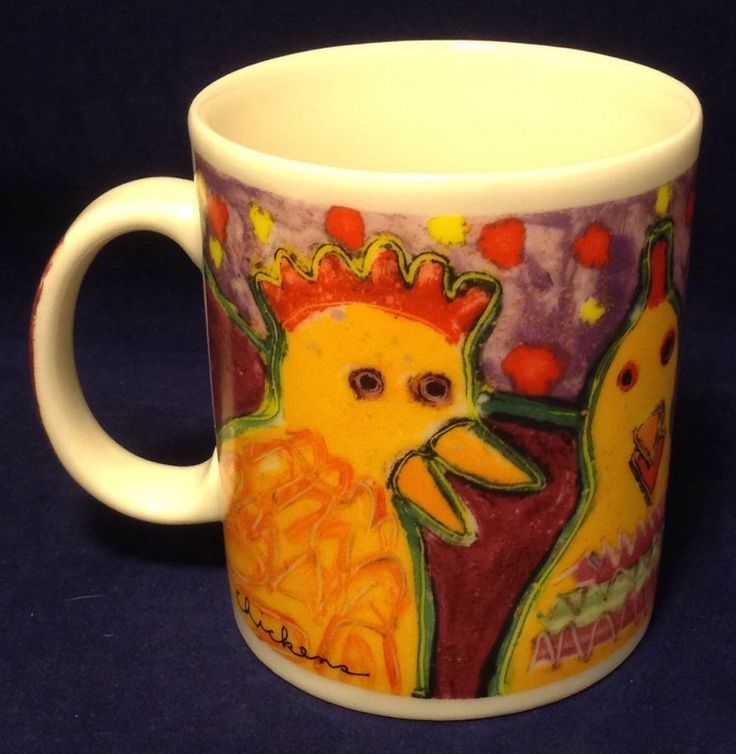
chicken mug

Found in Google Images, this is the actual mug which I still own (isn’t it wonderful?), that is featured in this poem.

Painted Chickens made its debut appearance in Sixfold Magazine, winter 2014 edition. 

Prompted to post it by Amy T., I dedicate it here to all of us who have looked back on our youths, shaken our heads,

and laughed…

Twenty years ago
I received a birthday gift
from a close college buddy-slash-sometime lover
(What on earth were we thinking?).
Back then, our past was already in the past
and twenty-four was already not young.
He gave me a coffee mug
covered in chickens––

yes, painted chickens––

three plump specimens posed around the outside,
and one that looks like an index finger
with an eye, a comb, a beak, and a wattle,
slapped onto the bottom.

How, I can’t fathom,
but my friend knew that those chickens
with their orange-red, expressionistic bodies
would be a boat-floater for me––
the one time I had slept with him
had been an epic shipwreck,

with a silent drive to the airport in its wake;
on the way, we choked down pancakes,
and I stifled sobs in my coffee,
averting my eyes
from the helpless horror in his.
I then flew off into the wild, wide sky,
bewildered, drowning.

Somehow, for years to come,
his southern gentlemanly charms
still served to allure:
he kept his promise to write
and took pains to catalogue for me
the details of his worldly escapades
and various, accompanying sexual conquests,
always making sure to emphasize
the ways in which they were hot for him,
so as to prove those trysts’ relative rightness.

Then, years later, for my birthday,
came the unexplainably gratifying
chicken cup.

Still burning hot
and feathered in their chili-pepper red,
royal purple and verdant green cloaks,
my static and impossibly happy
aphrodisiac chickens
blush like lovers on a Grecian urn;
clucking, urgent.

My southern gent,
now so long ago flown from this callous coop,
wooed another and had his own brood,
as, in due course, did I,
but the mug, no worse for wear, remains
a spectacular feature––
like a bright birthday piñata
(with its promise of sweet reward) ––
of my sacred morning ritual.

These chickens,
still ecstatically surprised,
letting out unabashed, open-beaked caterwauls,
adorn my most aged and prized coffee mug;
a vessel, perfectly-sized,
it cups its contents so adoringly,
fiercely,
like an egg enveloping its cache of gold,
as I take privileged sips.

The big chicken on the left
might actually be a rooster

and that one on the bottom,
a middle finger.

Confessional

“Forgive, O Lord, my little jokes
on Thee
And I’ll forgive Thy great big
one on me.”     Robert Frost

Toilet-Paper-Art

Today I used a piece of toilet paper––
so ingenious how the squares are perforated––
as a bookmark.

I marked the beginning
of a story in a journal
I pretended to mean to read soon.

My pretensions in the bathroom
are no more elaborate, I’d guess, than those of any other,
so why don’t we confess them, even to ourselves?

Confessionals are outfitted nowadays
with porcelain appliances, brass fixtures,
marble vanities with stacks of prayers in paperback––

(we futilely pray no one presumes these rituals
of bargaining our way out of bondage
to repugnant functions)––

to function as the ultimate ruse.
For no sleight-of-hand swipe performed
(however carefully) with unrolled, folded squares,

nor the most careful illusions of luxury
contrived of bodacious poses above prodigal devices,
will lessen the strain of such unnatural squatting.

Nature will still call from night’s drawn curtain,
beckoning us to the primal business

of dangling truth.

bidet kitty

A Human Soul’s Resurrection from Shame

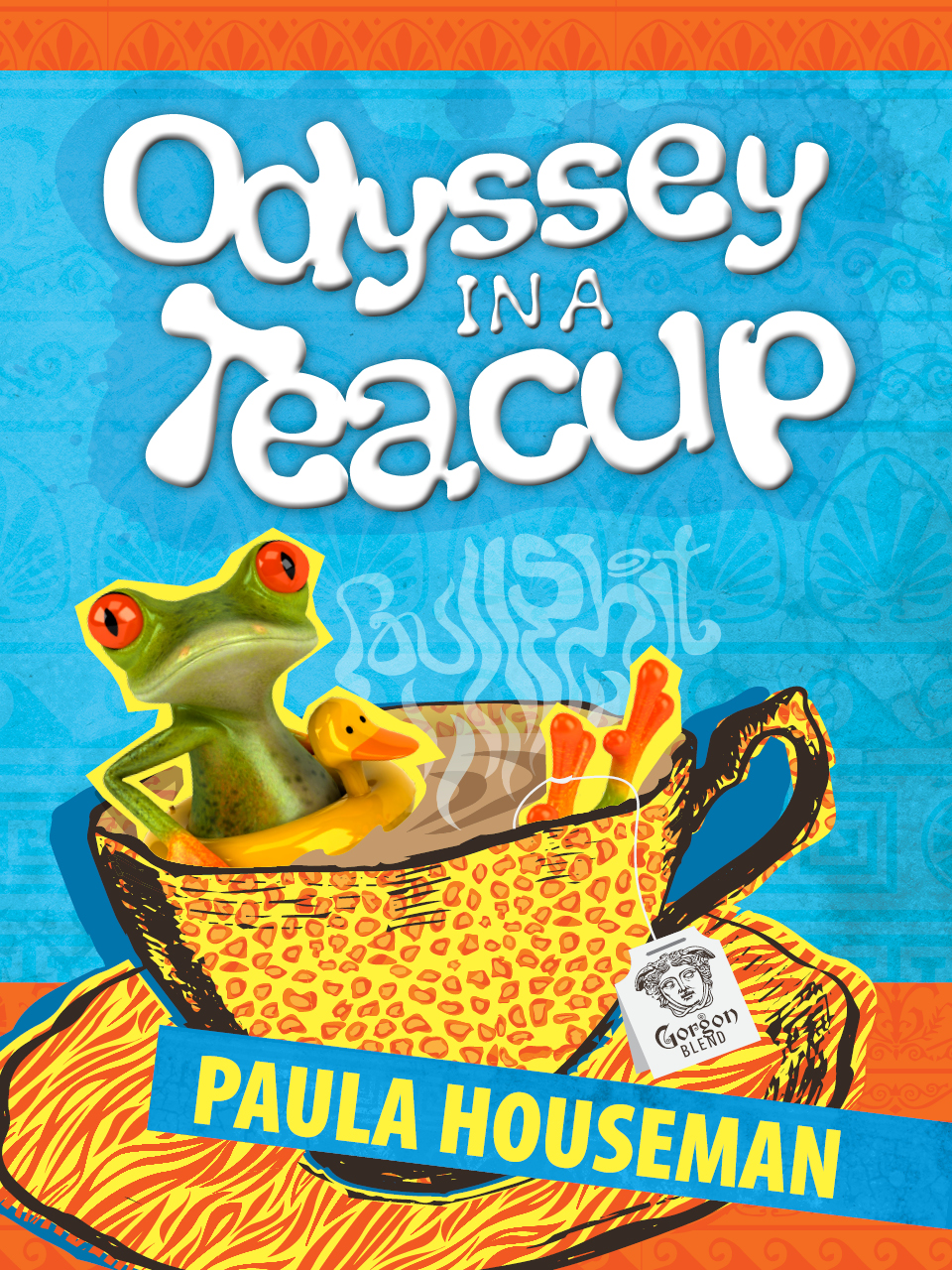
Odyssey in a Teacup_AmazonThumbnail_Small

Houseman, Paula (2015). Odyssey in a Teacup. Sydney, Australia: Wildwoman Publishing

Review by: Stephanie L. Harper

Paula Houseman’s Odyssey in a Teacup (purchase on Amazon) takes readers along with protagonist, Ruth Roth, on a brilliantly crafted, classic hero’s journey. From her initial stirrings, awakenings, and blaring Call to Adventure, through her protracted Initiation of descents and dashings upon the rocks (during which phase Ruth’s internal “bullshit detector” becomes a well-oiled, exquisitely adept machine), to her ultimate, victorious Return to the Self, Ruth encounters and defeats a series of soul-sucking harpies, who time and again try to bite off more than they can chew.

The decided “black sheep” of her family, the ruthlessly undermining treatment Ruth endures as a child is almost too terrible to see… Almost. If it were not for Houseman’s brazen wit, keen understanding of the ancient, universal forces at work in the very roots of humanity, and magnificently bawdy humor, Ruth Roth’s Odyssey would be little more than a lonely trek. Instead, in the very first chapter, when Ruth triumphs in an embarrassing modern-day encounter with “Cyclops,” we rush to back our champion with an unprecedented resolve — never leaving her side for the duration — and we are rewarded over and over with wretchedly wonderful, belly-shaking laughter, and liberating tears.

Houseman resurrects from the darkness (of fundamental, moralistic terrorism) the human soul, which we learn as children to regard as too grotesque as to be worthy of sight. In relating one such example of our conditioned belief in the shamefulness of our own humanity, she astutely observes the collective sentiment, “A cloud passed in front of the sun as if to stop it from seeing. Even nature was mortified.” But as the story progresses, such sentiments prove to be nothing more than our fearful, self-defeating human projections onto Nature, and Houseman’s heroine shines brightly — with moxie, and with the categorical approval of the gods and goddesses — in the sun.

Paula Houseman possesses all the verve, aplomb, and wisdom lauded of veteran authors. With rare authenticity and vigor, Houseman reveals the formative events of Ruth Roth’s life in a series of vignettes that infuse the pandemonium of Jackson Pollock expressionism with the clarity of purpose of the Sistine Chapel ceiling. We sense in each instance that Ruth ought to be asking herself, incredulously, How can this be my life? How can Nature permit another day of this existence to unfold? We feel we ought to avert our eyes, but we are captivated by a truth which strikes so close to home for us, because it so aptly mirrors that most basic of human truths: we are not born knowing how to recognize, much less question, the aberrations of dysfunctional family life, as they comprise our normal experience.

Yet, despite the mythical monsters’ best efforts to thwart her, Ruth Roth prevails as our champion. She becomes our mouthpiece, articulating for us the question that has always been lurking there, beneath the living room’s imitation woodgrain wallpaper, by exposing the fantastic lie that has surreptitiously enlisted our complicity in maintaining others’ fragile illusions at the expense of our realities.

Houseman’s Odyssey in a Teacup is epically defiant, bold, painful, hilarious, soul-fortifying, and a must-read for anyone who has ever dared (or hoped) to look at themselves in the mirror and ask the question, How in the hell have I survived?